It cannot confirm copyright ownership
A generated result may resemble protected artwork, branded designs, or a recognizable creative style.
Workaround
Use original prompts, avoid requesting close copies, and review the result before publishing.
Safety guide
Is it safe to generate AI pictures? Usually, yes—when you protect private information, respect consent and rights, and review every result before sharing.
Clear up the myths
An ai image generator is a tool, not a guarantee. Safer results come from understanding what the system does and where human judgment still matters.
Without every one of these the route does not run.
AI-generated images are automatically safe to use anywhere.
Usage rights depend on the source material, platform terms, people depicted, and intended use.
An ai image generator can reliably tell whether an image is ethical or legal.
The system can produce content, but it cannot replace consent checks, copyright review, or professional judgment.
If an image looks realistic, it must represent a real person or event.
Generated images may look convincing while depicting entirely fictional people, places, or situations.
Private prompts and uploads are harmless because they are only used once.
Avoid entering sensitive personal, medical, confidential, or proprietary information unless the service terms clearly support it.
Skip any of these and the route still works — they only make it faster.
A safety check is only needed for serious commercial work.
Even casual posts can mislead viewers or expose someone’s likeness without permission.
Know the limits
An ai image generator predicts visual patterns from a prompt or reference. It can help create concepts, but it does not verify truth, ownership, consent, or context.
A generated result may resemble protected artwork, branded designs, or a recognizable creative style.
Workaround
Use original prompts, avoid requesting close copies, and review the result before publishing.
An ai image generator may depict a real person without that person approving the use of their likeness.
Workaround
Use fictional subjects or obtain clear permission before creating or sharing identifiable images.
Generated scenes, text, faces, hands, and details can be invented or distorted while appearing believable.
Workaround
Treat every output as a draft and independently verify anything presented as real.
A harmless-looking request can still expose private information or create misleading, unsafe, or discriminatory material.
Workaround
Keep prompts general, remove sensitive details, and apply a human review step.
Continue carefully
Safety improves when you match the ai image generator to the task and keep sensitive decisions under human control.
Choose the right boundary
Some situations require consent, confidentiality, or professional review that a general ai image generator cannot provide on its own.
Choose this when
Do not upload private documents, unreleased product details, personal identifiers, or sensitive client material.
A general-purpose ai image generator is not the right place to test whether confidential data will remain protected.
Choose this when
Pause and use a verified source, documented consent, or a human-led production process instead.
A realistic generated image can be mistaken for evidence even when every detail is fictional.
Choose this when
Use qualified review and approved tools rather than relying on an ai image generator alone.
Healthcare, legal, employment, political, and identity-related contexts need controls beyond visual generation.
Review before sharing
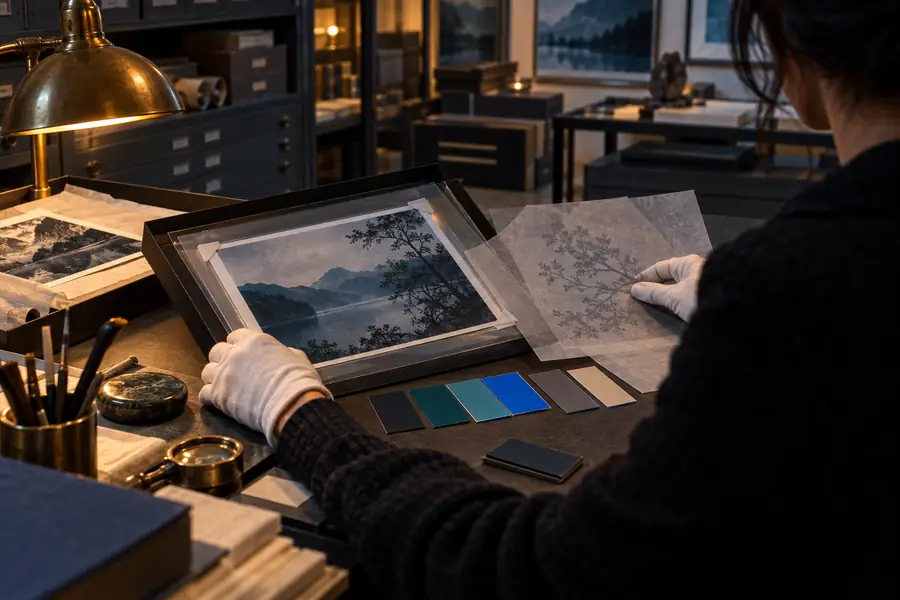
A reference image can guide an ai image generator without proving that the final result is accurate, authorized, or safe to publish.
 Reference concept
 Generated result
A changing workflow
The ai image generator workflow has moved from novelty experiments toward a review process that treats provenance, consent, and context as part of creation.
Research systems began producing novel visual patterns, but outputs were limited and rarely used as everyday creative assets.
Neural image systems became easier to access, increasing interest in face manipulation, style transfer, and automated editing.
Larger models made prompt-driven image generation more flexible, while concerns about training data, impersonation, and misuse grew.
Realistic outputs made it harder to distinguish fiction from documentation, so creators increasingly added consent, provenance, and fact-checking steps.
An ai image generator can accelerate ideation and production, but responsible users still decide what to enter, what to keep, and what to publish.
Your safety questions
These answers address the central question behind responsible image generation: is it safe to generate AI pictures in a particular situation?
It can be safe for many low-risk creative tasks when you avoid sensitive information, respect consent and intellectual property, and review the output. Safety depends on the prompt, the tool, the people or materials involved, and how the image will be used.
Yes. An ai image generator can create convincing faces, places, and events that never existed. Label fictional or heavily altered images when viewers could reasonably mistake them for documentation.
Only upload a personal photo when you understand the service’s handling practices and have permission from identifiable people. Avoid images containing private documents, children, medical details, or information that could expose someone to harm.
No. Publication may still raise questions about likeness, copyright, trademarks, deception, or platform rules. Review the output, remove misleading context, and confirm that your intended use is appropriate before sharing.